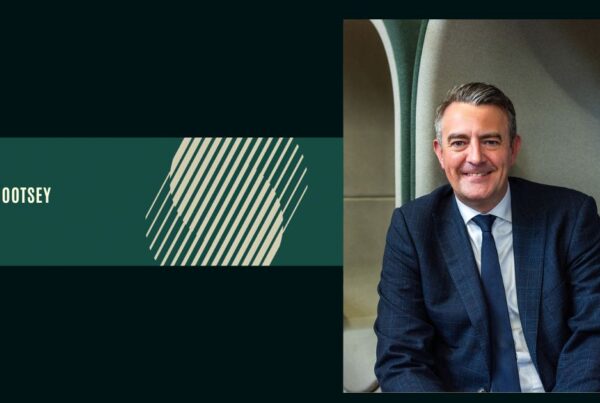
Andy Rootsey acted for his client, a chief executive, who lost his Board seats, Directorships and was threatened with the complete loss of his livelihood and reputation after being charged with sexually assaulting a stranger in the toilets of a City of London pub has been formally acquitted. His acquittal was secured after the Crown Prosecution Service accepted extensive written defence submissions made in advance of the Trial that the case failed both limbs of the Full Code Test.
Not guilty verdicts were entered in respect of both counts that he faced at Inner London Crown Court after the prosecution offered no evidence. The three-day trial listed to start on the 9th September 2026 has now been vacated.
The allegation
Our client — the founder and CEO of a company, was celebrating in a City of London pub on the day his company had floated on the stock exchange.
Shortly after 11pm, a man who had been drinking separately in the same pub alleged that our client had approached him from behind in the toilets at the urinals, slapped and then squeezed his buttock over clothing. Police were called. Our client was arrested outside the premises within minutes and interviewed the following morning at Bishopsgate Police Station.
In interview he answered every question. He said that the incident could not have happened, that he had no recollection of any interaction with the complainant, and that he could think of no reason why he would have done such a thing.
He was duly charged with sexual assault contrary to section 3 of the Sexual Offences Act 2003 together an alternative count of assault by beating added to the indictment.
What was at stake
It is difficult to overstate the seriousness of a sexual assault conviction for a man in our client’s position. Sexual assault is an either-way offence carrying a maximum of ten years’ imprisonment. But for a regulated professional, the sentence is rarely the sharpest edge of the risk.
That damage began long before any verdict. On disclosing the charge to the boards on which he sat, our client was suspended with immediate effect from providing regulated services to one firm and resigned as director and CEO of the public limited company he had founded and built. The consequences rippled outwards: funds owed to his company were withheld, he and senior colleagues were left paying staff wages out of personal savings, and employees lost their jobs. A conviction would have led to vigorous scrutiny from the Financial Conduct Authority and may well have been career ending, leaving the reputation of a man of good character entirely in tatters.
The defence approach
The difficulty our client faced was his complete lack of awareness of the incident even taking place and general poor recollection of events. All he could say was that as a heterosexual male he simply would not have acted as alleged. It was necessary therefore to forensically and systematically piece together
events from a variety of sources from the prosecution evidence, including the CCTV and from the prosecution’s own witnesses.
Rather than wait for trial, the defence made detailed written submissions highlighting the weaknesses in their case and inviting the CPS to review the case afresh under the Code for Crown Prosecutors. The Code makes it clear that review is a continuing duty, and by this stage the evidential picture had changed materially: the CCTV had been obtained and statements taken from Prosecution witnesses had been provided.
On the evidential test, the submissions focused not on attacking the complainant’s honesty, but on what the prosecution would actually have to make a jury sure of: that any touching was deliberate rather than accidental, and that it was sexual. Among the points advanced:
• The CCTV timings established that the two men were in the toilet area together for fewer than 18 seconds, in a busy facility with at least three other people present, including an attendant from whom no account had ever been taken.
• Our client’s intoxication was not merely a defence assertion. It was captured on CCTV, described by the bar manager, visible on body-worn footage of the arrest, and — critically — described by the complainant himself, who said our client appeared heavily intoxicated, was stumbling around, and was struggling to stand without leaning on the wall for support.
• That description was far more consistent with incidental contact by a man losing his balance than with a decision to sexually assault a complete stranger, without any prior interaction or build-up, in full view of witnesses.
• The complainant described contact by the left hand. Our client is right-handed.
• The two eyewitness accounts differed materially on duration — five to eight seconds on one account, two to three on the other — in circumstances where estimates of force and timing after a fleeting event are notoriously unreliable.
The outcome
Following those detailed representations, the Crown reviewed the case again and offered no evidence on both the sexual assault and the common assault counts. Not guilty verdicts were entered on the record, the September 2026 trial date was vacated, and our client left court an acquitted man, free to return to work with his name cleared.
Comment
All too frequently the Crown Prosecution Service will charge cases of this nature on the basis of the account of a complainant alone with little supporting evidence. Cases of this kind turn on the difference between an allegation that is honestly but mistakenly made and a charge that can be proved to the criminal standard.
The complainant may well have been shocked and upset by what he experienced; that does not make him the best judge of whether a drunk stranger who collided with him for a matter of seconds intended anything by it, still less anything sexual.
Forensic, properly evidenced representations to the Crown Prosecution Service are not a formality. Used well, they are the difference between having to endure the rigours and adverse publicity of a Trial or early vindication.
Gudrun Young KC of 2 Hare Court was instructed Counsel
If you or your business are facing an allegation of this nature, our criminal defence team at Murray Hughman LLP advises directors, regulated professionals and senior executives at every stage, from pre-charge engagement through to trial. Early advice materially improves outcomes.